Central Canal Stenosis Treatment in Greater Noida | Endoscopic Spine Surgery
What is Central Canal Stenosis?
Central canal stenosis is a spinal condition in which the spinal canal becomes narrow and compresses the spinal cord, thecal sac, and nerve roots. This usually happens due to ligamentum flavum hypertrophy, bone overgrowth, disc bulge, or age-related degeneration of the spine.
This compression may affect the central spinal cord or the nerve roots, causing pain, numbness, weakness, and difficulty in walking.
Central canal stenosis commonly affects the lumbar spine (lower back) but can also occur in the cervical spine (neck).
Causes of Central Canal Stenosis
Common causes include:
- Thickening of ligamentum flavum
- Degenerative spine disease
- Disc bulge / disc prolapse
- Bone spur (osteophyte) formation
- Aging changes in spine
- Previous spine injury
- Arthritis of spine joints
With aging, the spinal canal becomes narrow and can press on nerves, leading to symptoms.
Symptoms of Central Canal Stenosis
Patients may experience:
- Tightness in legs while walking
- Numbness in legs or feet
- Pain radiating to thighs or calves
- Weakness in lower limbs
- Back pain with leg pain
- Difficulty standing or walking for long time
- Relief after sitting or bending forward
A typical symptom is leg pain while walking that improves after rest, called neurogenic claudication.
Diagnosis of Central Canal Stenosis
Diagnosis is done by a spine specialist using:
- MRI Spine (best test)
- CT Scan
- Digital X-ray
- Neurological examination
- Nerve conduction test (if required)
MRI helps in identifying the level of stenosis and nerve compression.
Endoscopic Surgery for Central Canal Stenosis
Modern treatment for central canal stenosis includes Minimally Invasive Endoscopic Spine Surgery, which allows safe decompression of nerves with very small incision.
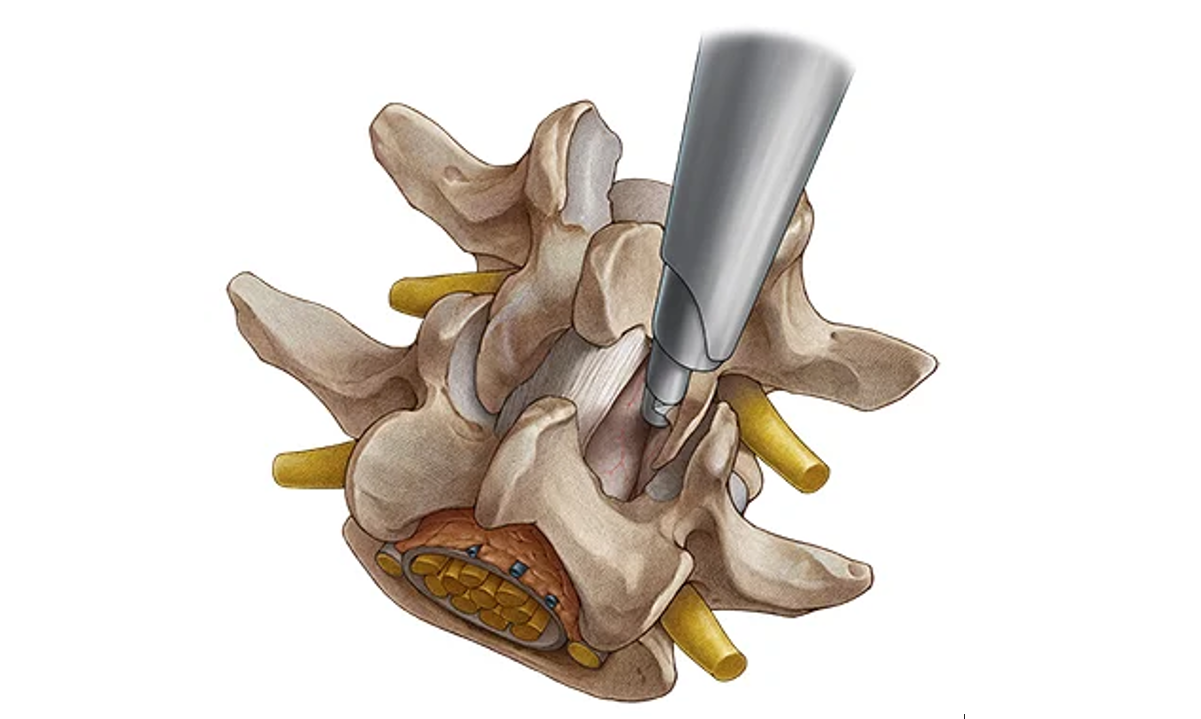
Surgical Technique – Interlaminar Endoscopic Approach
- A needle is inserted through the interlaminar window under fluoroscopy guidance.
- Endoscope is introduced through a small incision.
- The surgeon removes the hypertrophied ligamentum flavum and compressing bone.
- Decompression is extended to the opposite side using Over-the-Top technique.
- Pressure on spinal cord, thecal sac, and nerve roots is relieved.
This technique provides excellent results with minimal damage to muscles.
Benefits of Endoscopic Spine Surgery
- Minimally invasive procedure
- Small incision
- Less blood loss
- Less pain after surgery
- Faster recovery
- Short hospital stay
- Early return to work
- Safe and effective treatment
When is Surgery Required?
Surgery is recommended if:
- Pain persists despite medicines
- Walking distance decreases
- Weakness or numbness increases
- Severe stenosis seen on MRI
- Loss of bladder or bowel control
- Difficulty in standing or walking
Early treatment prevents permanent nerve damage.
Best Doctor for Central Canal Stenosis Treatment in Greater Noida
Central canal stenosis should be treated by an experienced Neurosurgeon / Spine Surgeon trained in endoscopic spine surgery.
Advanced endoscopic techniques allow safe decompression with faster recovery and better outcomes.
For consultation, evaluation, and minimally invasive spine surgery, visit our spine clinic for expert care.

Dr. Rahul Sharma
MBBS, MS, DNB (Neurosurgery), FIPP, FESS (Germany)
Senior Consultant Neurosurgery & Chief – MISS & Pain Modulation