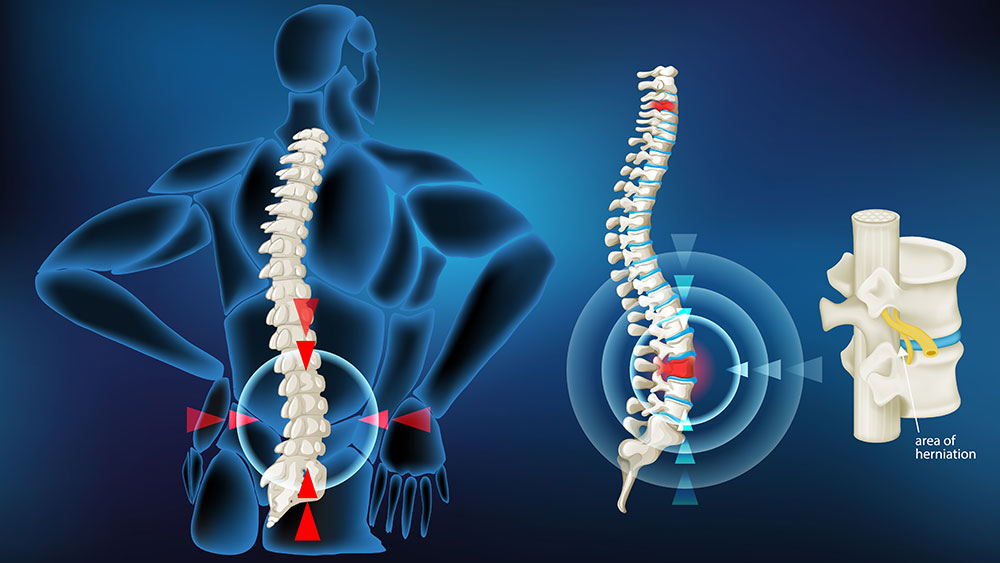
Disc Herniation Treatment with MISS (Minimally Invasive Spine Surgery)
Disc Herniation, commonly known as a slipped disc, occurs when the soft inner material of a spinal disc pushes out through its outer layer. This can compress nearby nerves, leading to pain, numbness, or weakness.
It can occur in different parts of the spine:
- Cervical (neck)
- Thoracic (mid-back)
- Lumbar (lower back)
What is MISS (Minimally Invasive Spine Surgery)?
Minimally Invasive Spine Surgery (MISS) is an advanced surgical technique used to treat disc herniation with smaller incisions, less muscle damage, and faster recovery compared to traditional open surgery.
MISS uses specialized instruments, microscopes, or endoscopic cameras to precisely treat the affected area.
When is MISS Required for Disc Herniation?
MISS is recommended when:
- Severe or persistent pain does not improve with medications
- Numbness or weakness worsens
- Difficulty in walking or performing daily activities
- Nerve compression is confirmed on MRI
- Conservative treatments fail after several weeks
Symptoms of Disc Herniation
- Back or neck pain
- Radiating pain to arms or legs (sciatica)
- Numbness or tingling
- Muscle weakness
- Reduced mobility
Benefits of MISS for Disc Herniation
- Smaller incision (minimal scarring)
- Less blood loss
- Reduced muscle damage
- Shorter hospital stay
- Faster recovery and return to work
- Lower risk of infection
Types of MISS Procedures
1. Microdiscectomy
Removal of the herniated portion of the disc using a
microscope.
2. Endoscopic Discectomy
A camera-guided procedure through a tiny
incision.
3. Percutaneous Discectomy
Removal of disc material through a needle-like
instrument.
Procedure Overview
- Performed under local or general anesthesia
- Small incision is made near the affected area
- Specialized tools are used to remove or repair the herniated disc
- Nerve pressure is relieved
- Procedure usually takes 1–2 hours
Recovery After MISS
- Most patients go home within 24–48 hours
- Resume light activities within a few days
- Full recovery in a few weeks
- Physical therapy may be recommended
Risks and Complications
Although rare, possible risks include:
- Infection
- Nerve injury
- Recurrence of disc herniation
- Bleeding
Who is the Ideal Candidate?
You may be a good candidate for MISS if:
- You have confirmed disc herniation
- You experience persistent nerve pain
- Non-surgical treatments have failed
- You are medically fit for surgery

Dr. Rahul Sharma
MBBS, MS, DNB (Neurosurgery), FIPP, FESS (Germany)
Senior Consultant Neurosurgery & Chief – MISS & Pain Modulation