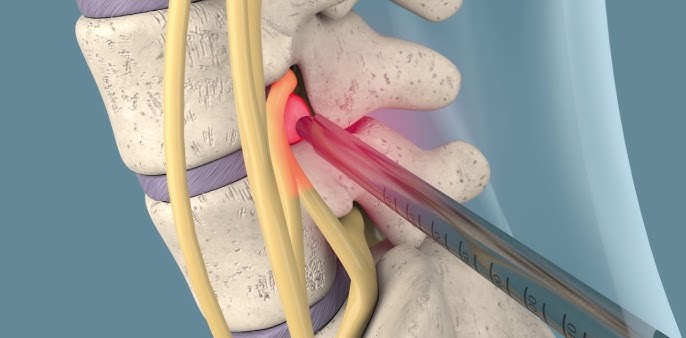
Disc Herniation Treatment with Endoscopy
What is a Disc Herniation?
A disc herniation, commonly known as a slipped or ruptured disc, occurs when the soft inner material of a spinal disc pushes through its outer layer. This condition can press on nearby nerves, leading to pain, numbness, or weakness in the back, neck, arms, or legs.
Disc herniation most commonly affects the lumbar spine (lower back) and cervical spine (neck).
Causes of Disc Herniation
Several factors can contribute to disc herniation, including:
- Age-related degeneration
- Sudden injury or trauma
- Heavy lifting with improper posture
- Repetitive strain on the spine
- Obesity and sedentary lifestyle
Symptoms of Disc Herniation
Symptoms vary depending on the location and severity of the herniation:
- Persistent back or neck pain
- Radiating pain (sciatica)
- Numbness or tingling sensations
- Muscle weakness
- Difficulty in movement or walking
What is Endoscopic Spine Surgery?
Endoscopic spine surgery is a minimally invasive procedure used to treat disc herniation. It involves the use of a thin tube-like instrument (endoscope) equipped with a camera and surgical tools to remove the herniated disc material.
This advanced technique allows surgeons to operate through a small incision, ensuring precision and minimal damage to surrounding tissues.
Endoscopic Discectomy Procedure
The most common endoscopic treatment for disc herniation is Endoscopic Discectomy.
Procedure Steps:
- Local or general anesthesia is administered
- A small incision (usually less than 1 cm) is made
- An endoscope is inserted to visualize the affected disc
- The herniated portion of the disc is removed
- The incision is closed with minimal sutures
Benefits of Endoscopic Treatment
Endoscopic spine surgery offers several advantages over traditional open surgery:
- Minimally invasive approach
- Smaller incision and less scarring
- Reduced pain after surgery
- Faster recovery time
- Short hospital stay (often same-day discharge)
- Lower risk of complications
Recovery After Endoscopic Surgery
Recovery is typically quick and smooth:
- Patients can walk within hours after surgery
- Return to daily activities within a few days
- Physical therapy may be recommended
- Full recovery usually occurs within a few weeks
Who is a Candidate for Endoscopic Disc Surgery?
You may be a suitable candidate if:
- You have confirmed disc herniation on MRI
- Symptoms persist despite conservative treatment
- Severe pain affecting daily life
- Nerve compression causing weakness or numbness
Risks and Complications
Although rare, possible risks include:
- Infection
- Nerve injury
- Recurrence of disc herniation
- Bleeding
Choosing an experienced spine specialist significantly reduces these risks.
Why Choose Endoscopic Spine Surgery?
Endoscopic spine surgery is a safe, effective, and modern solution for treating disc herniation. It combines advanced technology with patient comfort, making it one of the most preferred treatment options today.

Dr. Rahul Sharma
MBBS, MS, DNB (Neurosurgery), FIPP, FESS (Germany)
Senior Consultant Neurosurgery & Chief – MISS & Pain Modulation