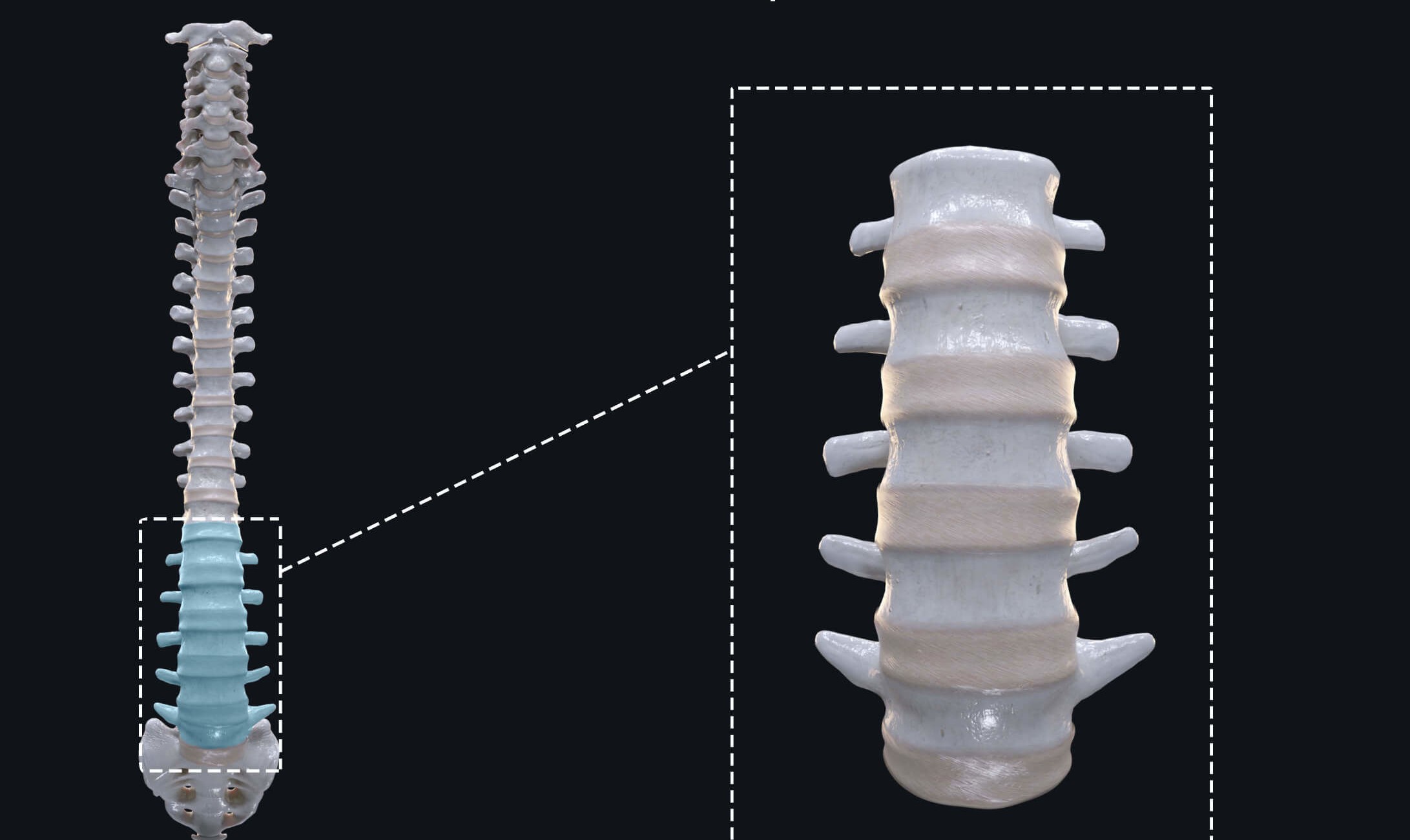
Lumbar Spine: Structure, Disorders & Advanced Treatment
The Lumbar Spine refers to the lower part of the backbone, located between the thoracic (mid-back) spine and the sacrum. It consists of five vertebrae (L1–L5) and is responsible for supporting most of the body's weight and enabling movement.
Due to its load-bearing role, the lumbar spine is the most commonly affected region for back pain and spinal disorders.
Functions of the Lumbar Spine
The lumbar spine plays a vital role in:
- Supporting upper body weight
- Allowing bending, twisting, and movement
- Protecting spinal nerves
- Absorbing shock during activities like walking and lifting
- Maintaining posture and balance
Common Lumbar Spine Conditions
- Lumbar Disc Herniation (Slipped Disc): A condition where a disc bulges or ruptures, pressing on nearby nerves and causing pain.
- Lumbar Spinal Stenosis: Narrowing of the spinal canal leading to nerve compression.
- Sciatica: Pain that radiates from the lower back down the leg due to nerve irritation.
- Degenerative Disc Disease: Age-related wear and tear of spinal discs.
- Spondylolisthesis: A condition where one vertebra slips over another.
- Muscle Strain or Ligament Injury: Often caused by improper lifting or sudden movements.
Symptoms of Lumbar Spine Problems
Symptoms vary depending on the condition:
- Lower back pain
- Pain radiating to the legs (sciatica)
- Numbness or tingling in legs
- Muscle weakness
- Difficulty standing, walking, or bending
- Stiffness in the lower back
Causes of Lumbar Spine Disorders
- Poor posture
- Sedentary lifestyle
- Heavy lifting or improper techniques
- Obesity
- Aging and degeneration
- Injury or trauma
Diagnosis
Doctors diagnose lumbar spine conditions using:
- Physical examination
- MRI scan (most accurate)
- CT scan
- X-rays
These tests help identify nerve compression, disc issues, and structural abnormalities.
Treatment Options
1. Non-Surgical Treatment
Most lumbar spine issues improve with conservative care:
- Pain medications
- Physical therapy and exercises
- Posture correction
- Lifestyle changes
- Epidural steroid injections
2. Minimally Invasive Treatments
- Endoscopic spine surgery
- Microdiscectomy
These procedures involve smaller incisions and quicker recovery.
3. Surgical Treatment
Recommended for severe cases:
- Laminectomy
- Discectomy
- Spinal fusion
Prevention Tips
- Maintain proper posture
- Exercise regularly (core strengthening)
- Avoid prolonged sitting
- Lift heavy objects correctly
- Maintain a healthy weight

Dr. Rahul Sharma
MBBS, MS, DNB (Neurosurgery), FIPP, FESS (Germany)
Senior Consultant Neurosurgery & Chief – MISS & Pain Modulation