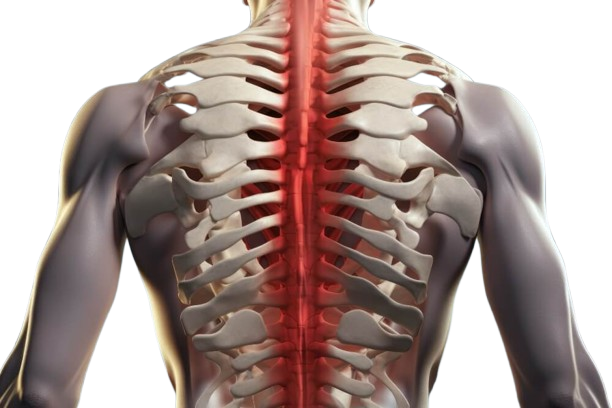
Dorsal Spine (Thoracic Spine): Structure, Disorders & Treatment
The Dorsal Spine, also known as the Thoracic Spine, is the middle part of the spine located between the cervical (neck) and lumbar (lower back) regions. It consists of 12 vertebrae (T1–T12) and is connected to the rib cage, providing stability and protection to vital organs like the heart and lungs.
Unlike other parts of the spine, the dorsal spine is less flexible but more stable.
Functions of the Dorsal Spine
The dorsal spine plays a crucial role in:
- Supporting the upper body
- Protecting the spinal cord
- Anchoring the rib cage
- Maintaining posture and balance
- Allowing limited but essential movement
Common Dorsal Spine Conditions
Several conditions can affect the thoracic spine:
- Thoracic Disc Herniation: A slipped disc in the mid-back that may compress nerves and cause pain.
- Dorsal Spine Pain: Often caused by poor posture, muscle strain, or prolonged sitting.
- Kyphosis: An excessive forward curvature leading to a hunched posture.
- Spinal Stenosis: Narrowing of the spinal canal that can compress nerves.
- Fractures or Trauma: Common in accidents or osteoporosis-related bone weakness.
- Infections or Tumors: Rare but serious conditions requiring immediate medical attention.
Symptoms of Dorsal Spine Problems
Symptoms vary based on the condition but may include:
- Mid-back pain or stiffness
- Pain radiating around the chest or ribs
- Muscle tightness
- Numbness or tingling (rare but possible)
- Difficulty in movement or posture
- Pain worsening with prolonged sitting or standing
Causes of Dorsal Spine Disorders
- Poor posture (especially desk jobs)
- Lack of physical activity
- Injury or trauma
- Age-related degeneration
- Osteoporosis
- Obesity or excess body weight
Diagnosis
Doctors use the following methods to diagnose dorsal spine issues:
- Physical examination
- MRI scan
- CT scan
- X-rays
These tests help identify structural problems and nerve involvement.
Treatment Options
1. Conservative Treatment
Most dorsal spine issues can be managed without surgery:
- Pain medications
- Physical therapy
- Posture correction
- Heat or cold therapy
- Lifestyle changes
2. Minimally Invasive Treatments
- Endoscopic spine procedures
- Image-guided injections
These offer faster recovery and less discomfort.
3. Surgical Treatment
Required in severe cases:
- Decompression surgery
- Spinal stabilization or fusion
Prevention Tips
- Maintain proper sitting and standing posture
- Exercise regularly (especially back strengthening)
- Use ergonomic furniture
- Avoid heavy lifting
- Maintain a healthy weight

Dr. Rahul Sharma
MBBS, MS, DNB (Neurosurgery), FIPP, FESS (Germany)
Senior Consultant Neurosurgery & Chief – MISS & Pain Modulation